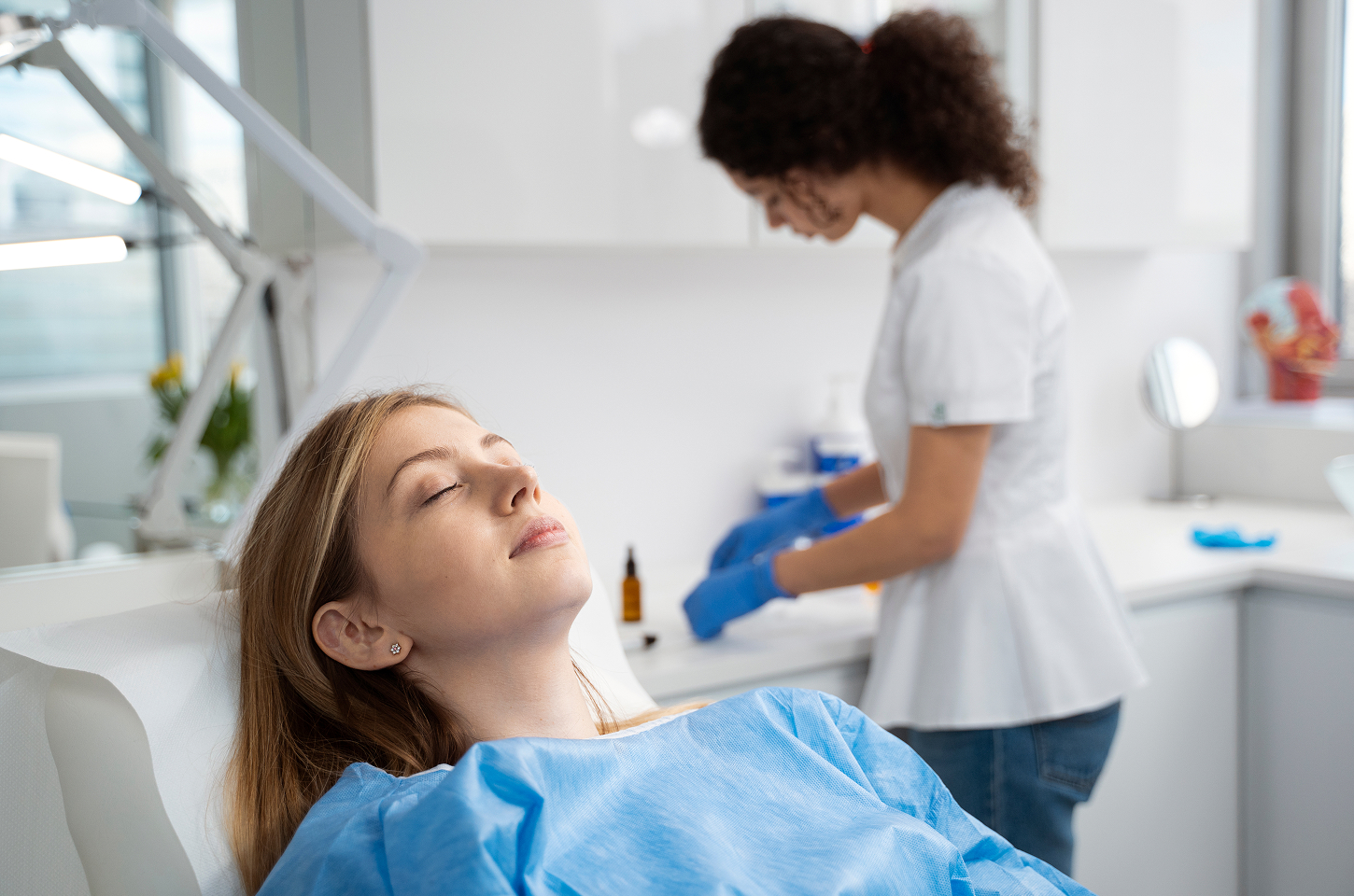
Cosmetic dentistry is not a single procedure. It is an entire category of treatment options, each designed to address different patient concerns. One person may need only professional whitening to reverse coffee stains. Another may want porcelain veneers to reshape teeth, close gaps, and change color simultaneously. A third patient might seek Invisalign to straighten crooked teeth before considering any other cosmetic work.
For residents of Carrollwood, FL, and surrounding communities including Cheval, Avila, Northdale, and Lake Magdalene, the range of available cosmetic options can feel overwhelming. This guide helps patients compare the most common cosmetic dentistry procedures—whitening, veneers, Invisalign, bonding, and full smile makeovers—so they can make informed decisions aligned with their goals, budget, and oral health status. The content follows evidence-based guidelines from the American Dental Association (ADA) and the American Academy of Cosmetic Dentistry (AACD).
Throughout this article, readers will find references to Tampa Dental Wellness of Carrollwood as an example of a comfort-first, women-led practice offering comprehensive cosmetic dentistry. The principles of evaluation, however, apply to any provider search in the Tampa Bay area. For a broader framework on selecting any dental provider, refer to the patient’s guide to choosing the right dentist in Carrollwood.
Table of Contents
Key Takeaways (TL;DR)
- Whitening changes color only: Best for patients happy with tooth shape and alignment but dissatisfied with shade. Results last 6 months to 2 years.
- Veneers change shape, color, and size: Ideal for multiple cosmetic issues including stains, chips, gaps, and misshapen teeth. Lifespan of 10 to 20 years.
- Invisalign fixes position, not color: Straightens crooked or crowded teeth and closes gaps without enamel removal. Does not whiten teeth.
- Bonding is the least invasive and least expensive: Best for small chips or minor gaps. Completed in one visit but less durable than veneers.
- Smile makeovers combine multiple procedures: Typically veneers, whitening, Invisalign, and sometimes crowns or implants for comprehensive transformation.
- Carrollwood cosmetic patients have options: Local providers offer all four pathways, often in combination. Consultation determines the right sequence.
What Is Cosmetic Dentistry and What Can It Fix?
Cosmetic dentistry refers to dental procedures that improve the appearance of teeth, gums, and the overall smile. Unlike restorative dentistry, which prioritizes function (chewing, speaking, pain relief), cosmetic dentistry focuses on aesthetics. However, the two categories often overlap—a porcelain crown can restore a broken tooth (restorative) while also matching natural tooth color (cosmetic).
The American Academy of Cosmetic Dentistry (AACD) maintains accreditation standards for dentists who demonstrate advanced proficiency in aesthetic treatment planning and smile design. Patients seeking significant cosmetic work should verify whether a dentist holds AACD membership or similar advanced training credentials.
What Cosmetic Dentistry Can Fix
- Discoloration: Stains from coffee, tea, red wine, tobacco, aging, or medications such as tetracycline.
- Chipped or cracked teeth: Minor to moderate damage that does not compromise tooth structure.
- Gaps between teeth (diastema): Spaces that patients find aesthetically displeasing.
- Misshapen or disproportionately small teeth: Teeth that appear out of proportion with adjacent teeth or facial features.
- Crowded or crooked teeth (mild to moderate): Alignment issues that affect smile symmetry.
- Worn or short teeth: From bruxism (teeth grinding) or acid erosion.
Local context: In Carrollwood, Cheval, and Avila, demand for cosmetic dentistry is high among professionals and retirees. Many patients in these communities seek smile enhancement not for medical necessity but for confidence in social and professional settings. A cosmetic dentist in Carrollwood can address all of these concerns, often combining multiple procedures for comprehensive results.
Key clinical observation: Many patients overestimate what whitening can achieve and underestimate the transformative potential of veneers. A diagnostic consultation with digital smile preview helps align expectations with reality before any treatment begins.
Professional Teeth Whitening — The Fastest Cosmetic Improvement
Professional teeth whitening is the most accessible and least invasive cosmetic dental procedure. Unlike over-the-counter strips or gels, professionally dispensed whitening products use higher concentrations of carbamide peroxide or hydrogen peroxide under controlled conditions, producing faster and more predictable results.
Two Types of Professional Whitening
- In-office whitening: A single appointment lasting approximately one hour. The dentist applies a high-concentration peroxide gel, often activated by a special light. Patients typically see results of 3 to 8 shades lighter immediately. Average cost ranges from $300 to $800.
- Take-home custom trays: The dentist creates custom-fitted trays and provides lower-concentration gel for home use over 1 to 2 weeks. Results are gradual but comparable to in-office whitening. Average cost ranges from $200 to $500.
The ADA accepts whitening products with its Seal of Acceptance as safe for enamel when used as directed. Temporary tooth sensitivity is the most common side effect, typically resolving within 48 hours.
Candidacy and Limitations
Whitening works best on yellow stains. It is less effective on gray or brown discoloration, including tetracycline stains and fluorosis. Whitening does not change the color of existing restorations—crowns, veneers, bridges, or fillings will remain their original shade while natural teeth lighten, creating mismatch.
Results are temporary. Depending on dietary habits (coffee, tea, red wine, tobacco) and oral hygiene, whitening effects typically last 6 months to 2 years. Touch-up treatments or maintenance with take-home trays extend longevity.
For residents of Carrollwood seeking a fast, non-invasive cosmetic improvement, professional teeth whitening in Carrollwood provides an excellent entry point into cosmetic dentistry without commitment to irreversible procedures.
Porcelain Veneers — The Complete Smile Transformation
Porcelain veneers are thin, custom-crafted shells of dental ceramic bonded to the front surface of teeth. They are the most transformative cosmetic option available through general dentistry, capable of changing tooth color, shape, size, and alignment simultaneously.
What Veneers Fix
- Severe discoloration unresponsive to whitening (tetracycline stains, fluorosis, intrinsic stains)
- Chipped or fractured teeth
- Gaps between teeth (diastema)
- Misshapen or worn teeth
- Teeth that are too small or too short
- Mild crowding or crookedness
The Veneer Process
- Consultation and smile design: The dentist evaluates oral health, discusses goals, and often creates a digital smile preview or diagnostic wax-up.
- Tooth preparation: The dentist removes approximately 0.3 to 0.5 millimeters of enamel from the front surface of each tooth receiving a veneer. This step is irreversible.
- Impressions and temporaries: Digital scans or physical impressions are sent to a dental laboratory. Temporary veneers protect prepared teeth for 2 to 4 weeks.
- Bonding: The permanent veneers are bonded to teeth with high-strength dental cement.
Veneers typically last 10 to 20 years with proper oral hygiene and regular dental visits. They resist staining better than natural enamel and require no special maintenance beyond normal brushing, flossing, and professional cleanings.
The trade-offs are significant: veneers are irreversible, more expensive than whitening or bonding, and require replacement at the end of their lifespan. For patients in Cheval and Avila seeking dramatic, long-lasting smile transformation, porcelain veneers in Carrollwood remain the gold standard.
Invisalign — Straightening Without Metal Braces
Invisalign uses a series of clear, removable aligners to gradually move teeth into proper position. Unlike traditional metal braces, Invisalign aligners are virtually invisible and can be removed for eating, brushing, and flossing.
What Invisalign Fixes
- Crowded teeth
- Gaps between teeth (diastema)
- Overbite (upper teeth overlapping lower teeth too much)
- Underbite (lower teeth protruding past upper teeth)
- Crossbite (upper and lower teeth not aligning properly)
- Open bite (front teeth not touching when back teeth are closed)
Invisalign does NOT change tooth color, shape, or address chips or wear. Patients with both alignment and cosmetic concerns may need Invisalign first, followed by whitening or bonding.
Treatment Time and Compliance
Typical treatment duration ranges from 6 to 18 months, depending on case complexity. Patients must wear aligners 20 to 22 hours per day, removing them only for meals and oral hygiene. Compliance directly affects outcomes—patients who wear aligners inconsistently extend treatment time or fail to achieve desired results.
Comparison with veneers for gaps: Veneers close gaps in 2 to 3 weeks but require irreversible enamel removal. Invisalign closes gaps naturally in 6 to 12 months without removing any enamel. For younger patients or those who prioritize preserving natural tooth structure, Invisalign is the preferred approach.
For professionals in Carrollwood, Northdale, and Lake Magdalene who want straighter teeth without the appearance of braces, Invisalign in Carrollwood offers a discreet, effective solution.
Dental Bonding — The Least Invasive Cosmetic Option
Dental bonding involves applying tooth-colored composite resin directly to the tooth surface, sculpting it into shape, and hardening it with a special light. Unlike veneers, bonding requires little to no enamel removal and is completely reversible.
What Bonding Fixes
- Small chips or cracks
- Minor gaps between teeth
- Misshapen teeth
- Exposed tooth roots from gum recession
- Small cavities (when used as a filling)
Advantages and Disadvantages
- Advantages: Same-day completion, lowest cost among cosmetic options ($200 to $600 per tooth), no enamel removal, reversible.
- Disadvantages: Less durable than veneers (3 to 5 years vs. 10 to 20 years), stains more easily, less lifelike appearance than porcelain, requires polishing and potential replacement more frequently.
Bonding serves as an excellent “trial” cosmetic treatment for patients uncertain about committing to veneers. It also works well for small, non-biting-edge chips where durability demands are low.
What Is a Smile Makeover and Which Procedures Does It Include?
A smile makeover is a comprehensive, customized treatment plan combining multiple cosmetic procedures to address all patient concerns simultaneously. Unlike single-procedure treatments, smile makeovers consider facial aesthetics, gum position, tooth proportions, and overall harmony.
Typical Smile Makeover Components
- Porcelain veneers (6 to 10 upper teeth most common)
- Professional whitening (if natural teeth remain)
- Invisalign (if alignment requires correction before veneers)
- Dental bonding (for minor touch-ups)
- Porcelain crowns (for severely damaged teeth)
- Gum contouring (to correct uneven or excessive gum display)
The Smile Makeover Process
- Comprehensive consultation: Digital photos, x-rays, smile analysis, and discussion of goals.
- Digital smile design: Computer-generated preview of expected results.
- Diagnostic wax-up: Physical model showing proposed tooth shapes and positions.
- Mock-up trial: Temporary resin applied to teeth so patients can see and feel the proposed smile.
- Staged treatment: Procedures sequenced appropriately (e.g., Invisalign first, then whitening, then veneers).
Total treatment time ranges from 3 to 12 months depending on whether Invisalign is required. For patients in Cheval and Avila seeking comprehensive smile transformation, smile makeovers in Carrollwood provide the highest level of aesthetic customization.
Cosmetic Dentistry Comparison Matrix — Which Procedure Is Right for You?
The table below helps patients match their specific concerns to the most appropriate cosmetic procedure.
How to Choose the Right Cosmetic Dentist in Carrollwood
Cosmetic dentistry requires different evaluation criteria than general dentistry. A dentist who excels at fillings and crowns may lack advanced training in smile design and porcelain veneer placement. The following questions help patients identify qualified cosmetic providers.
Credentials to Look For
- AACD membership or accreditation: The American Academy of Cosmetic Dentistry maintains rigorous standards for accredited members.
- Continuing education records: Cosmetic dentistry evolves rapidly. Look for dentists who regularly attend advanced training.
- Before and after portfolio: Request to see photos of completed cases similar to your own concerns.
Questions to Ask During a Cosmetic Consultation
- “How many veneers or Invisalign cases have you completed in the last year?”
- “Do you offer digital smile preview or diagnostic wax-ups before I commit?”
- “Do you place veneers directly or use a dental laboratory?” (High-quality veneers require lab fabrication.)
- “Can I see a mock-up of my new smile on my teeth before final bonding?”
- “What is your policy if I am unhappy with the final result?”
For patients seeking cosmetic dentistry in Carrollwood, the comfort-first, women-led approach at Tampa Dental Wellness of Carrollwood emphasizes thorough consultation, digital smile design, and patient input throughout the treatment planning process.
For a broader framework on evaluating dental providers beyond cosmetic concerns, refer to the complete patient’s guide to choosing the right dentist in Carrollwood.
Community Overview — Cosmetic Dentistry Access in Carrollwood, Cheval, and Avila
The demand for cosmetic dentistry varies significantly by community. In Carrollwood, Cheval, and Avila, higher median household incomes and professional demographics drive interest in aesthetic dental procedures.
Communities Served from 11123 N Dale Mabry Hwy
- Carrollwood and Carrollwood Village: Core service area. Patients seek all cosmetic procedures, from whitening to full smile makeovers.
- Cheval (33558): Affluent gated community. High demand for porcelain veneers and Invisalign among professionals.
- Avila (33613 / 33548 area): Luxury gated community. Patients frequently request comprehensive smile makeovers and implant-supported cosmetic restorations.
- Northdale (33624): Family-oriented community. Parents seek Invisalign for teenagers and whitening for themselves.
- Lake Magdalene (33612, 33613, 33618): Lakefront community. Cosmetic demand spans all age groups.
- Citrus Park (33625, 33626): Growing suburban area. Increasing interest in Invisalign and professional whitening.
The central Carrollwood location on N Dale Mabry Highway provides convenient access from all these communities. Evening hours on Wednesdays until 6:30 PM accommodate working professionals who cannot take daytime appointments for cosmetic consultations or Invisalign check-ups.
Frequently Asked Questions (People Also Ask)
Do veneers ruin your natural teeth?
The veneer process requires removal of approximately 0.3 to 0.5 millimeters of enamel from the front surface of the tooth. This removal is irreversible. However, veneers protect the underlying tooth structure and typically last 10 to 20 years. Patients should not proceed with veneers unless they accept the permanence of enamel reduction.
Is Invisalign more expensive than veneers?
Invisalign typically costs $3,000 to $7,000 for full treatment. Porcelain veneers cost $1,000 to $2,500 per tooth. For a patient needing six upper veneers to close gaps and change color, total cost ($6,000 to $15,000) may exceed Invisalign. For a patient needing only two veneers for small chips, veneers are less expensive. The comparison depends entirely on the number of teeth treated.
Does teeth whitening weaken enamel?
No. Professionally dispensed whitening products with the ADA Seal of Acceptance are safe for enamel when used as directed. Temporary tooth sensitivity is common but resolves within 48 hours. Whitening does not cause long-term damage or erosion.
Can I get veneers if I grind my teeth?
Yes, but a custom nightguard is essential. Bruxism (teeth grinding) without protection can crack or chip porcelain veneers. Patients who clench or grind should wear a nightguard nightly to protect their veneer investment.
How do I know if I need bonding or a veneer?
Bonding is best for small, non-biting-edge chips (size of a grain of rice or smaller). Bonding costs less, requires no enamel removal, and completes in one visit. Veneers are better for larger chips, multiple concerns (color plus shape plus gaps), and biting edges. A cosmetic consultation with digital preview helps determine which option suits your specific case.
Does dental insurance cover cosmetic dentistry?
Generally, no. Dental insurance plans exclude procedures performed primarily for cosmetic purposes. However, if a veneer or crown is needed to restore a broken tooth (restorative necessity), insurance may cover the restorative portion. Patients should request a predetermination of benefits before starting any cosmetic treatment.
How long do porcelain veneers last?
With proper oral hygiene, regular dental visits, and nightguard use if needed, porcelain veneers typically last 10 to 20 years. They resist staining better than natural enamel and require no special maintenance beyond normal brushing and flossing.
Can I whiten my teeth if I have crowns or veneers?
Whitening agents do not change the color of porcelain or composite restorations. If you whiten natural teeth adjacent to crowns or veneers, the restorations will remain their original shade, creating a mismatch. Patients with existing restorations should complete whitening first, then have restorations replaced or matched to the new shade.
Conclusion — Starting Your Cosmetic Dentistry Journey in Carrollwood
Cosmetic dentistry offers a spectrum of options, each suited to different patient concerns, budgets, and tolerance for invasiveness. The decision framework follows a logical sequence: color only → whitening. Position only → Invisalign. Small chips → bonding. Multiple concerns → veneers or a comprehensive smile makeover.
Patients in Carrollwood, Cheval, Avila, Northdale, and Lake Magdalene benefit from local access to experienced cosmetic dentists who offer all these pathways. The central location at 11123 N Dale Mabry Hwy minimizes travel time, and evening hours accommodate working professionals.
The most important step is the diagnostic consultation. A qualified cosmetic dentist evaluates oral health, discusses goals, and provides digital smile previews or diagnostic wax-ups before any treatment begins. This planning phase prevents mismatched expectations and ensures patients understand the trade-offs of each option.
For patients ready to explore cosmetic dentistry, Tampa Dental Wellness of Carrollwood offers comprehensive cosmetic services including whitening, veneers, Invisalign, smile makeovers, and general cosmetic dentistry.
Consideration-level CTA: To understand the step-by-step process of a smile makeover and see digital smile preview examples, schedule a cosmetic consultation at Tampa Dental Wellness of Carrollwood.
About the Author & Editorial Standards
This cosmetic dentistry guide was developed under the clinical guidance of the dental team at Tampa Dental Wellness of Carrollwood, a women-led practice located at 11123 N Dale Mabry Hwy, Tampa, FL 33618.
Dr. Alisha Anand brings advanced training in cosmetic dentistry including porcelain veneers, Invisalign, and smile makeovers. Her approach emphasizes conservative treatment planning and digital smile preview technology.
Dr. Amy Creech-Gionis has over 30 years of advanced dental expertise, including comprehensive cosmetic and restorative dentistry. She holds credentials recognized by the American Academy of Cosmetic Dentistry and the International Congress of Oral Implantologists.
All clinical content has been reviewed against current guidelines from the American Dental Association (ADA), the American Academy of Cosmetic Dentistry (AACD), and peer-reviewed dental literature.
Last reviewed: April 2026
Sources & References
- American Dental Association (ADA) — ada.org
- American Academy of Cosmetic Dentistry (AACD) — aacd.com
- Centers for Disease Control and Prevention (CDC) Oral Health — cdc.gov/oralhealth
- Florida Dental Association (FDA) — floridadental.org
*This article is for educational purposes and does not constitute medical advice. Readers should consult with a licensed dental professional for diagnosis and treatment recommendations.*